












Road Safety Begins With You Road accidents are among the most serious public safety concerns in our daily lives. Every day, thousands of people travel on roads for work, education, shopping, business and other essential activities. While roads connect communities and make everyday life easier, careless driving, overspeeding, distracted driving and failure to follow traffic rules can turn an ordinary journey into a life-threatening situation.
As a Community Advisor, I believe that road safety is not merely the responsibility of traffic police or law enforcement agencies. It is a shared responsibility that begins with every driver, motorcyclist, pedestrian, cyclist and member of the community.
A moment of negligence can result in a lifetime of regret. A few seconds saved by speeding are never worth risking a human life.
Through this awareness initiative, My Bahria encourages all residents, motorists, visitors and road users to adopt responsible driving habits, respect traffic regulations and actively contribute towards preventing road accidents.
Our message is simple: Follow Traffic Rules, Drive Responsibly, Protect Lives.
1. Understanding the Major Causes of Traffic Accidents
Most road accidents are preventable. Although road conditions, weather and mechanical failures can contribute to accidents, human negligence remains an important risk factor.
The following are some common causes of road accidents:
1.1 Overspeeding and Reckless Driving
Driving above the prescribed speed limit reduces the driver's ability to control the vehicle and respond to unexpected situations.
Overspeeding is particularly dangerous near:
-
Residential streets and housing communities.
-
Schools, colleges and educational institutions.
-
Markets, shopping centres and commercial areas.
-
Mosques, parks and pedestrian crossings.
-
Intersections, roundabouts and narrow roads.
Always observe the posted speed limits and adjust your speed according to road conditions, visibility and traffic density.
1.2 Mobile Phone Use While Driving
Using a mobile phone while driving is one of the most dangerous forms of distracted driving.
Checking WhatsApp messages, answering calls, reading notifications, recording videos or using social media takes attention away from the road.
Even a brief distraction can prevent a driver from noticing a pedestrian, motorcycle or vehicle approaching unexpectedly.
Safety precaution: Never text, browse or operate your mobile phone while driving. If an important call is necessary, park your vehicle safely before answering.
1.3 Wrong-Way Driving
Driving against the designated traffic direction creates a serious risk of head-on collisions and endangers everyone on the road.
Some motorists take shortcuts by driving in the wrong direction, particularly on service roads, narrow streets and commercial routes.
Always follow directional signs, road markings and designated entry and exit points.
1.4 Failure to Maintain a Safe Distance
Driving too closely behind another vehicle reduces the time available to react if the vehicle ahead suddenly brakes.
Maintain a safe following distance, increase it during rain, fog or poor visibility, and avoid unnecessary tailgating.
1.5 Dangerous Overtaking
Overtaking without checking mirrors, blind spots or approaching traffic can lead to serious collisions.
Never overtake:
-
On blind curves or sharp turns.
-
Near intersections and pedestrian crossings.
-
Where road markings prohibit overtaking.
-
When visibility is limited.
-
When another vehicle is already overtaking.
1.6 Driving Without a Valid Licence
Driving without proper training, a valid driving licence or sufficient knowledge of traffic regulations puts lives at risk.
Every driver should obtain the appropriate driving licence and understand the traffic rules before operating a vehicle.
1.7 Driving Under Fatigue or Influence
Drowsiness, exhaustion, alcohol and impairing substances can significantly reduce concentration, judgment and reaction time.
Never drive when tired, sleepy or under the influence of alcohol or any substance that affects your ability to drive safely.
2. Essential Traffic Rules Every Driver Must Follow
Traffic regulations exist to maintain order, prevent collisions and protect road users. Following them is not optional; it is a responsibility.
Every motorist should observe the following essential rules:
-
Obey traffic signals: Stop at red lights, proceed when the signal permits and follow traffic police instructions.
-
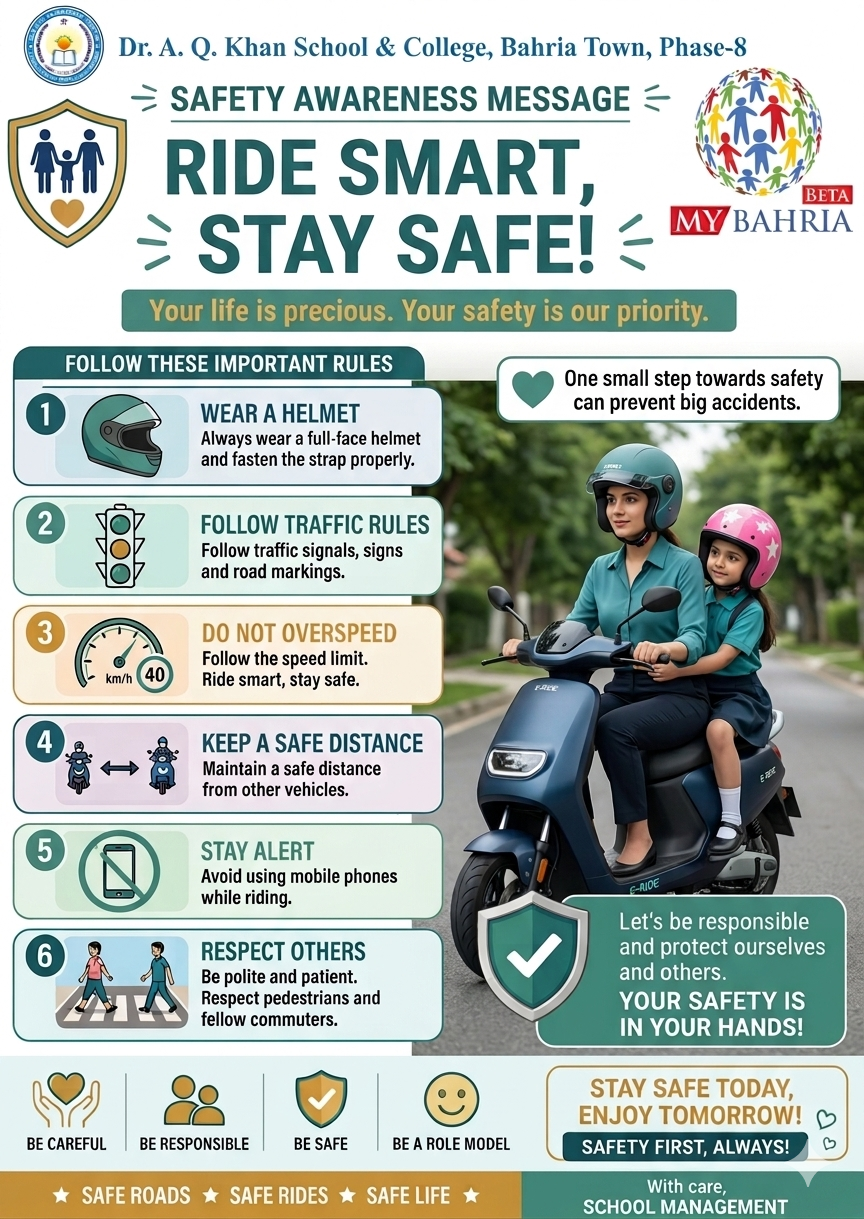
Observe speed limits: Never exceed the prescribed speed limit, particularly in residential and crowded areas.
-
Wear seat belts: Drivers and passengers should wear properly fitted seat belts.
-
Wear approved helmets: Motorcyclists and their passengers should wear properly fastened, certified helmets.
-
Use indicators: Signal before turning, changing lanes, entering traffic or parking.
-
Respect lane discipline: Stay within your designated lane and avoid unnecessary lane changes.
-
Follow road signs: Pay attention to warning, regulatory and directional signs.
-
Stop at pedestrian crossings: Give pedestrians the right of way at designated crossings.
-
Avoid illegal parking: Never block roads, footpaths, emergency routes, entrances or intersections.
-
Maintain a safe distance: Allow enough space between your vehicle and the vehicle ahead.
-
Carry valid documents: Keep your driving licence, vehicle registration and other required documents up to date.
-
Never use the horn unnecessarily: Avoid excessive honking, especially in residential and hospital areas.
3. Special Road Safety Precautions for Motorcyclists
Motorcyclists are among the most vulnerable road users because they have less physical protection in the event of a collision.
For safer motorcycle journeys:
-
Always wear a properly fastened safety helmet.
-
Ensure the helmet is certified and in good condition.
-
Never ride without a helmet, even for a short distance.
-
Avoid overspeeding and dangerous weaving between vehicles.
-
Never carry more passengers than legally permitted.
-
Use indicators before turning or changing lanes.
-
Keep both hands on the handlebars while riding.
-
Avoid carrying heavy or unbalanced loads.
-
Maintain working headlights, brake lights and indicators.
-
Wear visible or reflective clothing at night.
-
Never use a mobile phone while riding.
-
Check tyres, brakes and lights before starting your journey.
Parents should also discourage underage and unlicensed motorcycle riding. Providing a motorcycle to an inexperienced child can expose them and other road users to unnecessary danger.
4. Pedestrian Safety: Protecting Children, Senior Citizens and Families
Pedestrians have an equal right to use public roads safely. Children, elderly people and individuals with mobility challenges require additional consideration from motorists.
Pedestrians should:
-
Use designated zebra crossings and footpaths.
-
Look both ways before crossing the road.
-
Avoid crossing between parked vehicles.
-
Never suddenly step into moving traffic.
-
Avoid using mobile phones or headphones while crossing busy roads.
-
Wear visible clothing when walking at night.
-
Hold young children's hands while crossing roads.
-
Follow pedestrian signals wherever available.
Drivers should:
-
Slow down near schools, parks, mosques and residential streets.
-
Stop for pedestrians at designated crossings.
-
Never park on footpaths or pedestrian pathways.
-
Exercise additional caution when children are nearby.
-
Avoid aggressive driving around elderly and disabled pedestrians.
A responsible driver always remembers that pedestrians are not obstacles; they are people whose safety matters.
5. Safe Driving During Night, Rain and Fog
Weather conditions and reduced visibility increase the risk of road accidents. Drivers must exercise additional caution during adverse weather and nighttime travel.
Driving During Rain
Rain can make roads slippery and increase braking distances. Water accumulation can also hide potholes and damage to road surfaces.
Precautions include:
-
Reduce your speed and avoid sudden braking.
-
Maintain a greater distance from vehicles ahead.
-
Keep headlights and windscreen wipers in good working condition.
-
Avoid driving through deep or fast-moving floodwater.
-
Watch for pedestrians and motorcyclists on slippery roads.
-
Avoid sharp turns and sudden lane changes.
Driving During Fog
Fog significantly reduces visibility and makes it difficult to judge the distance of other vehicles.
-
Reduce speed and use appropriate fog lights where available.
-
Use low-beam headlights when visibility is poor.
-
Avoid unnecessary overtaking.
-
Maintain a safe distance from other vehicles.
-
Do not use hazard lights as a substitute for proper driving lights while moving.
-
If visibility becomes dangerously low, pull over at a safe location away from moving traffic.
Nighttime Driving Precautions
Nighttime driving requires greater concentration because visibility is reduced and some road users may be difficult to see.
-
Ensure headlights, indicators and brake lights are functioning.
-
Avoid looking directly into the headlights of oncoming vehicles.
-
Reduce speed in poorly illuminated areas.
-
Watch for pedestrians, cyclists and motorcycles.
-
Never drive when feeling sleepy or exhausted.
6. Vehicle Maintenance: Prevent Accidents Before They Happen
A mechanically sound vehicle is an essential part of road safety. Regular vehicle inspections can identify problems before they become dangerous.
Every vehicle owner should regularly inspect:
|
Vehicle component |
Safety precaution |
|---|---|
|
Tyres |
Check tyre pressure, tread depth and condition |
|
Brakes |
Ensure brakes respond properly |
|
Headlights |
Check headlights and high/low beams |
|
Indicators |
Ensure all indicators work correctly |
|
Brake lights |
Confirm rear brake lights function |
|
Windscreen wipers |
Replace worn or damaged blades |
|
Mirrors |
Adjust and maintain clear visibility |
|
Steering |
Check for unusual vibrations or handling problems |
|
Battery |
Ensure the battery and electrical system are functioning |
|
Engine |
Follow the manufacturer's maintenance schedule |
Do not ignore unusual sounds, warning lights, fluid leaks or mechanical problems. If a vehicle is unsafe to operate, arrange professional inspection before using it on public roads.
7. Traffic Safety in Bahria Town: A Shared Community Responsibility
Residential communities require special attention to road safety because their roads are shared by families, children, elderly residents, pedestrians, cyclists, motorcyclists and motorists.
Bahria Town's residential and commercial areas experience daily movement of residents, visitors, delivery riders, school transport and service vehicles. Responsible road behaviour is therefore essential to maintaining a safe community environment.
As a Community Advisor, I would particularly encourage residents, visitors and motorists to observe the following precautions:
7.1 Maintain Low Speeds in Residential Streets
Residential roads are frequently used by children, families, pedestrians and elderly residents. Drivers should maintain a safe and controlled speed rather than treating residential streets as racing tracks.
7.2 Exercise Caution Near Schools
School entrances and surrounding roads require special attention, particularly during morning arrival and afternoon departure hours.
Drivers should slow down, avoid unnecessary honking and never park in a way that blocks school gates or pedestrian movement.
Parents should also ensure that children board and leave vehicles from safe locations.
7.3 Avoid Wrong-Side Driving and Unauthorised Shortcuts
Taking a shortcut by driving against the traffic direction can cause serious accidents. Residents should use designated roads, entry points and exits.
7.4 Do Not Block Emergency Access
Vehicles should never be parked in front of emergency entrances, fire brigade access points, ambulance routes or other designated emergency areas.
A blocked road can delay emergency response and potentially cost someone's life.
7.5 Follow Parking Discipline
Avoid parking on corners, roundabouts, footpaths, narrow streets and areas where parking is prohibited.
Proper parking helps maintain smooth traffic movement and provides safe access for emergency vehicles.
7.6 Respect Community Security and Traffic Staff
Residents and visitors should cooperate with authorised traffic personnel and security staff. Follow their directions, respect temporary road closures and avoid arguments or confrontational behaviour.
7.7 Report Dangerous Road Conditions
Damaged roads, malfunctioning traffic signals, missing road signs, poor lighting, open manholes and other hazards should be reported to the relevant community administration or responsible authorities.
Prompt reporting can help prevent accidents before they happen.
8. Traffic Safety Rules for Parents and Young Drivers
Parents play an important role in developing responsible road users.
Children often learn driving behaviour by observing adults. If parents ignore traffic signals, overspeed or drive while using mobile phones, children may consider such behaviour normal.
Parents should:
-
Teach children basic road safety from an early age.
-
Always use seat belts when travelling with children.
-
Use appropriate child restraints according to the child's age, height and weight.
-
Never allow underage children to drive cars or motorcycles.
-
Ensure young drivers receive proper training and hold the required licence.
-
Explain the dangers of reckless driving and mobile phone use.
-
Set a positive example by following traffic regulations.
Remember, road safety education should begin at home.
9. What Should You Do Immediately After a Road Accident?
Even with careful driving, accidents can sometimes occur. Knowing how to respond can prevent further injuries and help save lives.
If you witness or become involved in a road accident, follow these precautions:
Step 1: Stay Calm and Assess the Situation
Stop in a safe location, switch on hazard warning lights when appropriate and assess the situation without putting yourself or others in danger.
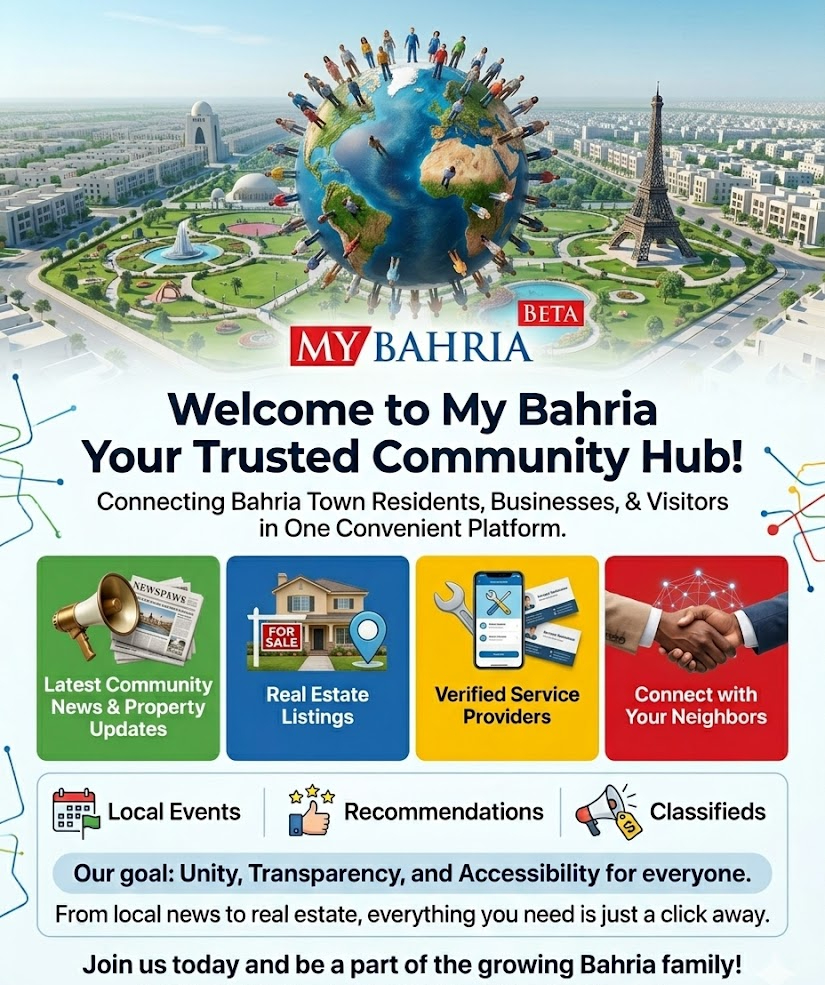
My Bahria App – Instant Emergency Assistance
I recommend making the My Bahria App an important part of this awareness campaign.
Add the following section to the blog:
Get Emergency Assistance Through the My Bahria App
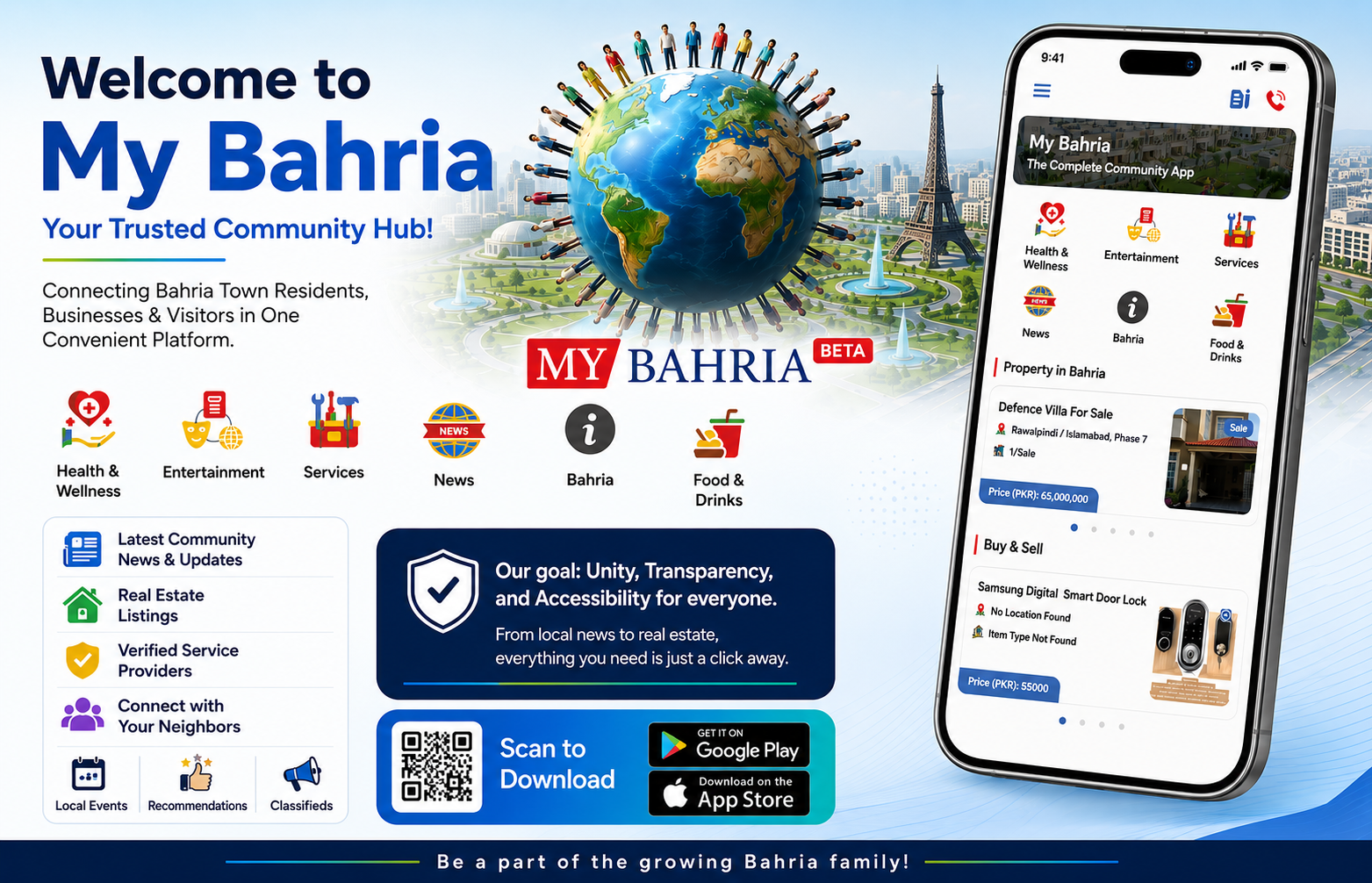
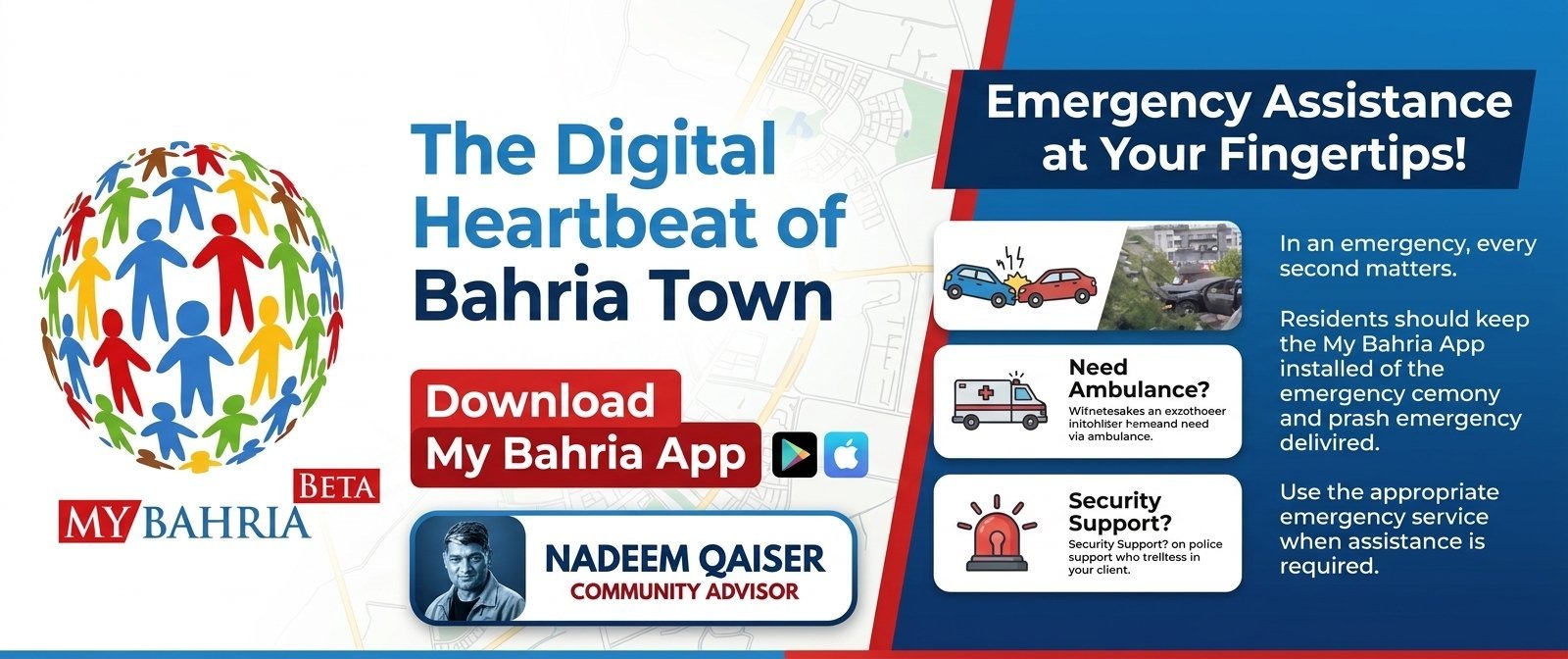
In an emergency, every second matters. Residents should keep the My Bahria App installed on their smartphones to access important community information and emergency contact services.
Whether you witness a road accident, require ambulance assistance, need security support or face another emergency, the app provides a convenient way to access emergency contact information.
Residents are encouraged to:
-
Download and install the My Bahria App.
-
Familiarise themselves with the Emergency Services section.
-
Save important emergency contacts for quick access.
-
Share the app with family members.
-
Use the appropriate emergency service when assistance is required.
My Bahria – Bahria Town Community App | Property, Services & News
Download My Bahria App
The Digital Heartbeat of Bahria Town
Emergency Assistance at Your Fingertips!
Step 2: Call Emergency Services
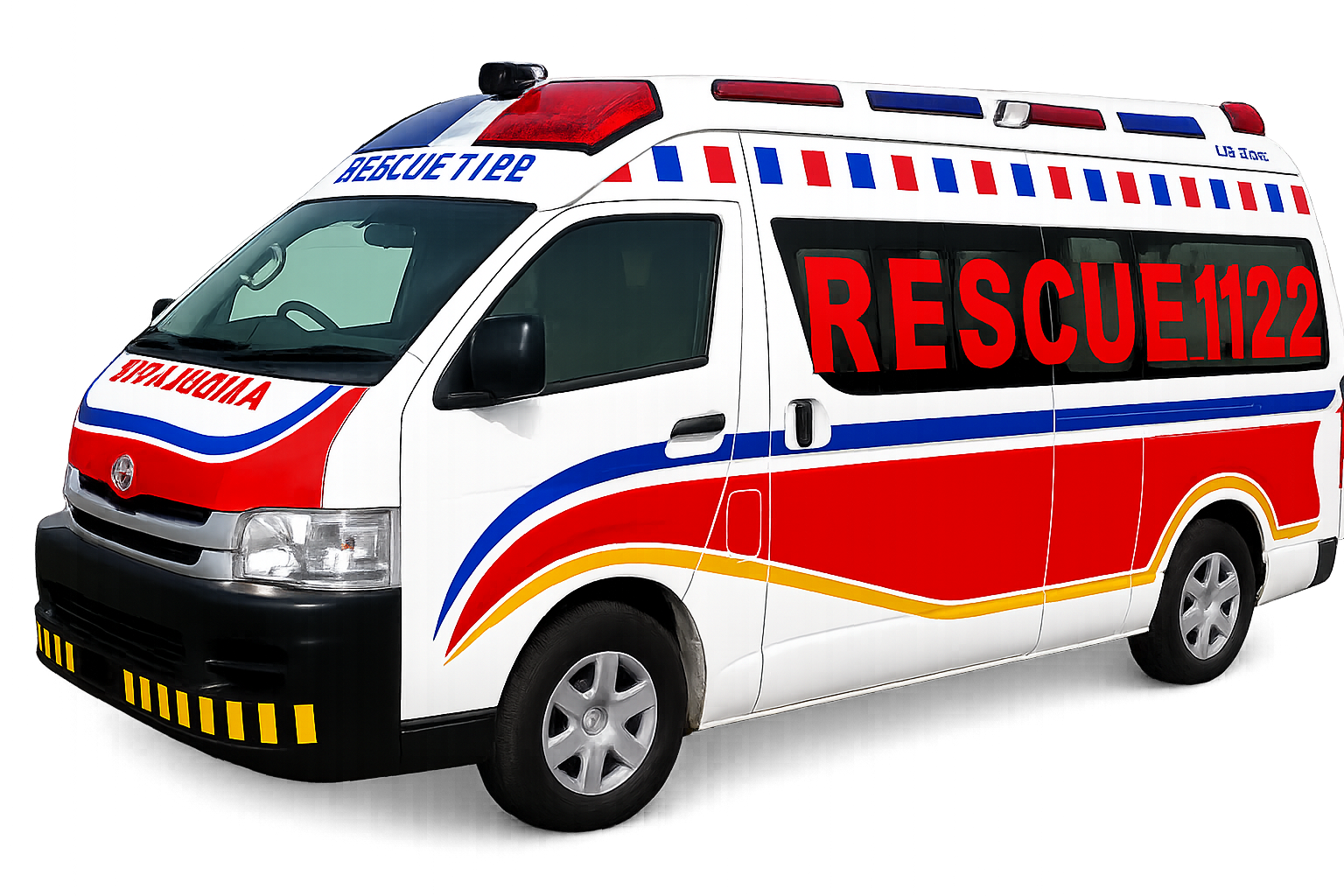
Contact Rescue 1122 in Punjab when emergency medical assistance or rescue services are required. Provide the exact location, nature of the incident and number of injured people.
Step 3: Protect the Accident Scene
If safe to do so, warn approaching traffic and prevent additional collisions. Do not put yourself in the path of moving vehicles.
Step 4: Avoid Unnecessary Movement of Injured People
Do not move an injured person unless there is an immediate danger, such as fire or another serious threat. Moving someone with a possible spinal injury can worsen their condition.
Step 5: Provide First Aid Only Within Your Training
Offer assistance within your capabilities while waiting for professional medical responders. Follow the emergency operator's instructions.
Step 6: Cooperate With Authorities
Provide accurate information to traffic police and emergency responders. Avoid arguments, unnecessary gatherings and sharing victims' photographs or videos on social media.
Important: Never leave an injured person without arranging appropriate emergency assistance.
10. The Role of Traffic Police, Community Administration and Residents
Road safety requires cooperation between all stakeholders. While individual responsibility is essential, an organised community safety system can make a significant difference.
Traffic Police and Law Enforcement Agencies
-
Enforce traffic regulations fairly.
-
Take action against dangerous driving and traffic violations.
-
Improve traffic awareness through educational campaigns.
-
Monitor high-risk roads and intersections.
-
Support accident prevention and emergency response.
Community Administration
-
Maintain roads, road markings and traffic signs.
-
Ensure adequate street lighting.
-
Identify dangerous intersections and high-risk areas.
-
Improve pedestrian crossings and traffic management.
-
Coordinate with relevant authorities regarding road safety concerns.
-
Promote awareness campaigns for residents and visitors.
Residents and Visitors
-
Follow all traffic regulations.
-
Drive patiently and responsibly.
-
Respect pedestrians and fellow motorists.
-
Report road hazards and dangerous driving.
-
Encourage family members and young people to practise safe road behaviour.
No single organisation can eliminate road accidents alone. A safer community is built when everyone fulfils their responsibility.
11. Common Traffic Violations That Must Be Avoided
The following dangerous behaviours should never be treated as minor mistakes:
|
Unsafe behaviour |
Possible consequences |
|---|---|
|
Overspeeding |
Loss of control and severe collisions |
|
Running red lights |
Dangerous intersection crashes |
|
Wrong-side driving |
Head-on collisions |
|
Mobile phone use |
Delayed reaction and distraction |
|
Riding without a helmet |
Serious head injuries |
|
Driving without a seat belt |
Increased risk of severe injury |
|
Illegal parking |
Blocked traffic and emergency access |
|
Dangerous overtaking |
Side-impact and head-on collisions |
|
Driving under the influence |
Impaired judgment and control |
|
Underage driving |
Increased risk due to inexperience |
Every traffic violation creates a potential danger for someone else. Responsible road use requires discipline, patience and respect for human life.
12. Let's Build a Road Safety Culture in Our Community
Road safety should not be limited to occasional awareness messages. It should become a permanent part of our community culture.
My Bahria encourages residents, parents, educational institutions, businesses, motorists and community organisations to work together to promote safer roads.
We can make a meaningful difference by:
-
Organising road safety awareness sessions.
-
Educating schoolchildren about pedestrian safety.
-
Promoting helmet and seat belt use.
-
Sharing traffic awareness messages through social media.
-
Encouraging responsible motorcycle and car driving.
-
Reporting dangerous road conditions.
-
Recognising individuals and organisations that contribute to community safety.
Small actions, when adopted by thousands of people, can create a major positive impact.
13. A Message From the Community Advisor
As a Community Advisor, I strongly believe that protecting human life must always remain our highest priority.
A road accident does not affect only the driver or passenger. It can change the lives of entire families, leaving behind emotional suffering, financial difficulties and irreversible loss.
We must understand that traffic rules are not restrictions on our freedom; they are safeguards designed to protect us and the people around us.
Whether you are driving a luxury car, riding a motorcycle, operating a commercial vehicle or simply walking along the road, you have a responsibility to respect others and follow safety regulations.
Let us make a collective commitment to:
-
Drive within speed limits.
-
Always wear seat belts and helmets.
-
Never use mobile phones while driving.
-
Respect traffic signals and road signs.
-
Give pedestrians their rightful space.
-
Avoid reckless driving and unnecessary overtaking.
-
Educate our children about road safety.
-
Cooperate with traffic police and community authorities.
Your family is waiting for you at home. Drive safely, follow traffic rules and make every journey a safe one.
FOLLOW TRAFFIC RULES. SAVE LIVES.
Road Safety Is Everyone's Responsibility!
A Community Awareness Initiative
My Bahria
Traffic Accident Prevention, Road Safety, Traffic Rules, Safe Driving, Road Safety Awareness, Traffic Safety Pakistan, Bahria Town Rawalpindi, My Bahria, Community Safety, Accident Prevention, Motorcycle Safety, Pedestrian Safety, Defensive Driving, Traffic Awareness, Driving Precautions, Save Lives, Road Safety Campaign.