


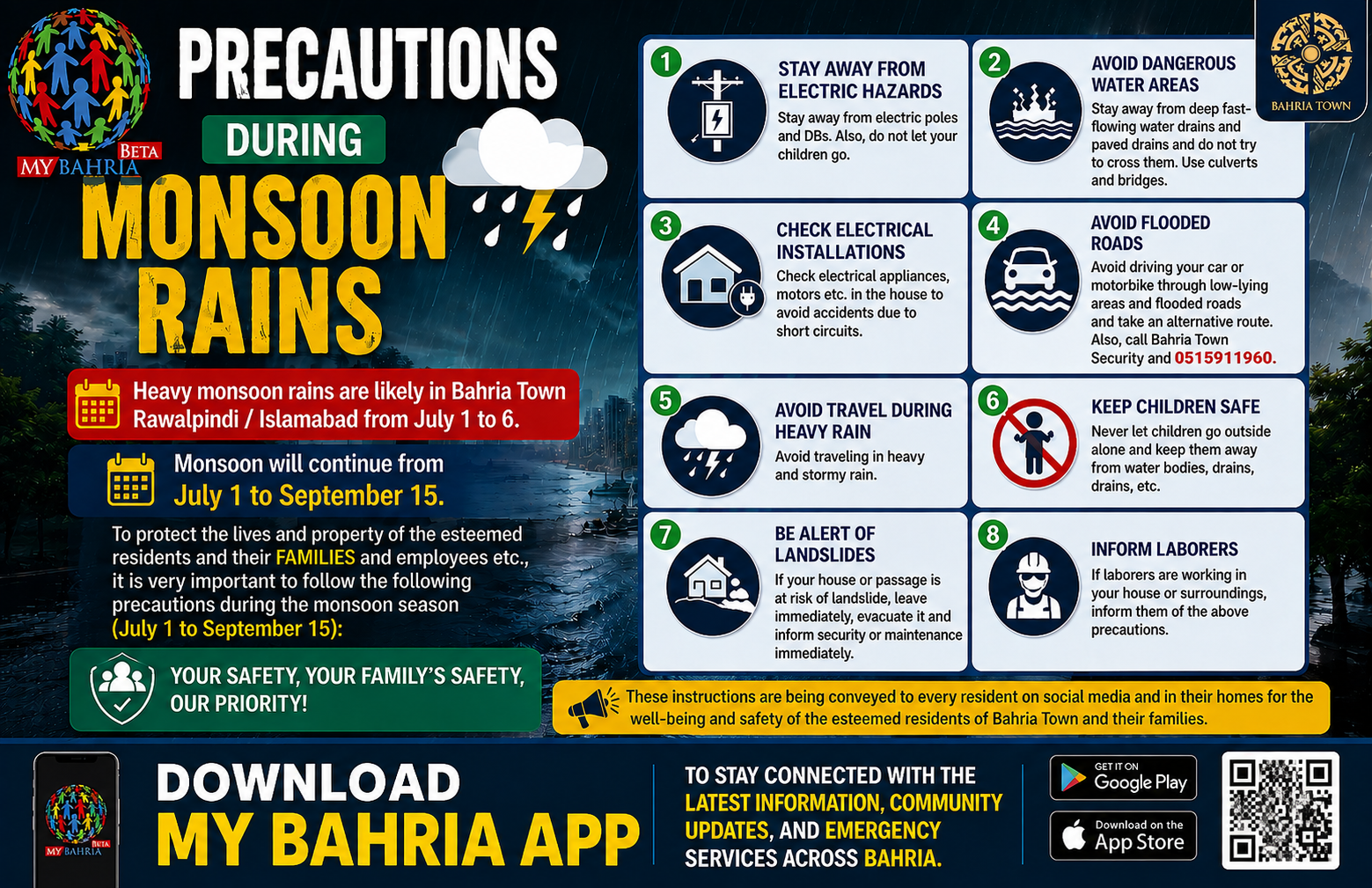










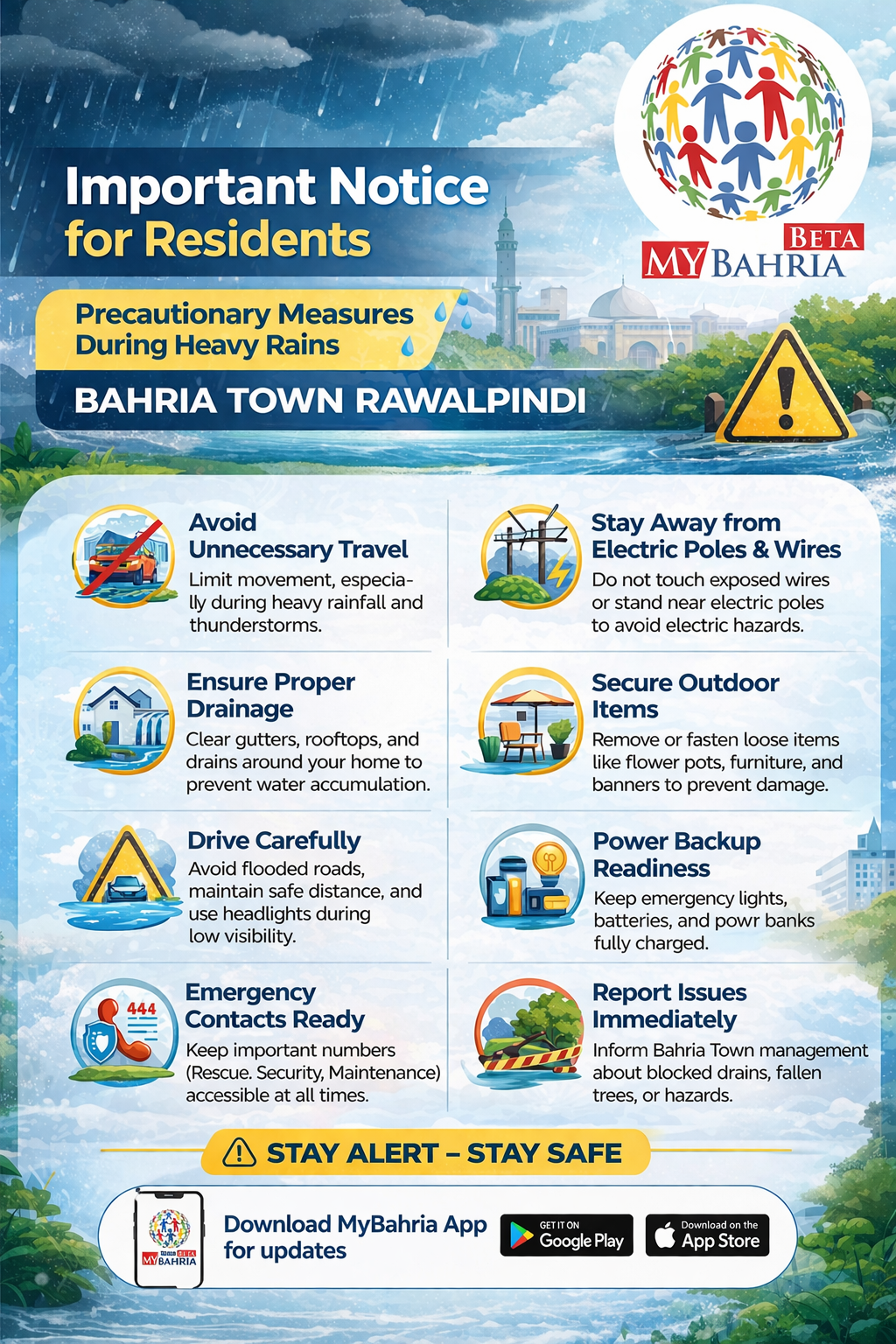















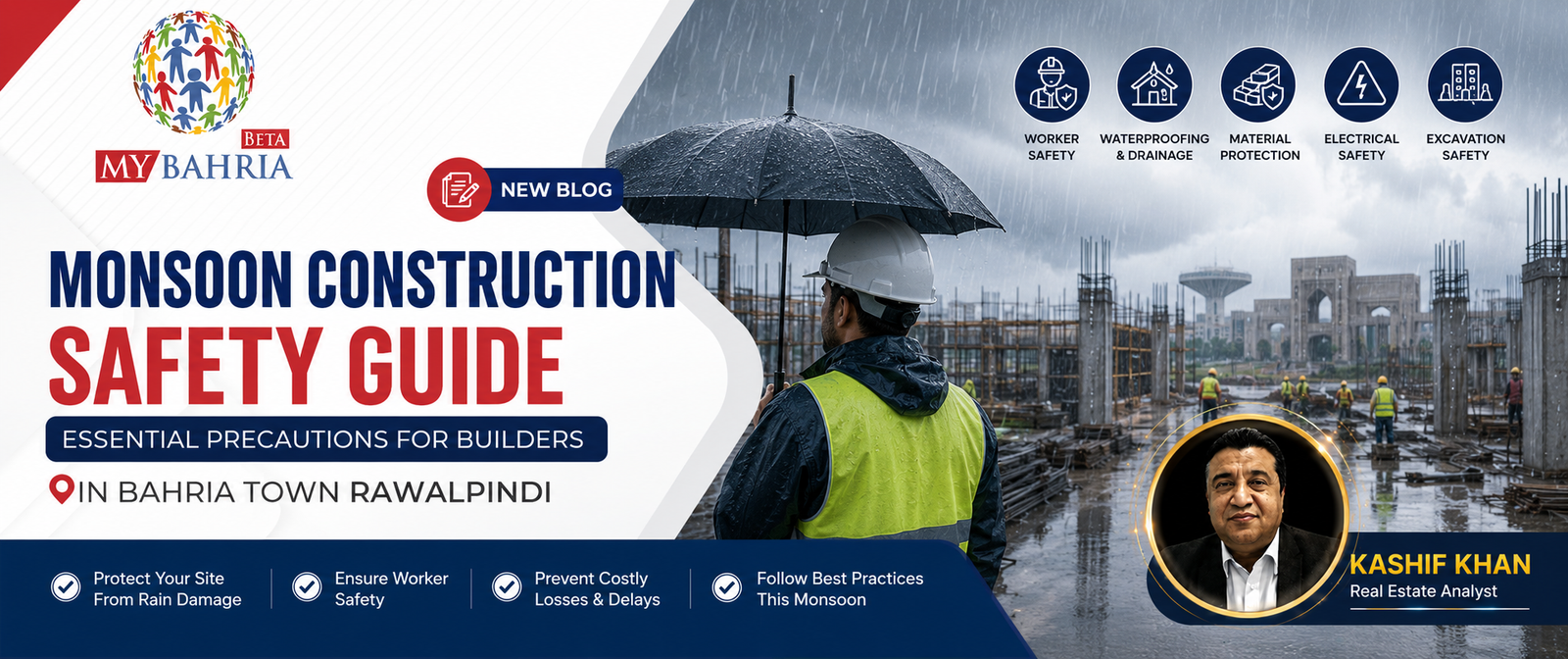
The monsoon season brings much-needed rainfall to Bahria Town Rawalpindi, but heavy downpours can create significant challenges for ongoing construction projects. Excavated areas can fill with water, soil can become unstable, construction materials can be damaged, electrical systems can become hazardous, and poor drainage can affect neighboring properties and public infrastructure.
For builders, contractors, architects, site supervisors, and property owners carrying out construction in Bahria Town Rawalpindi, monsoon preparedness should be treated as an essential part of construction management—not as an emergency measure after heavy rain begins.
The National Disaster Management Authority (NDMA) has highlighted the risk of localized intense rainfall and urban flooding during the 2026 monsoon season and emphasized drainage improvements, infrastructure strengthening, preparedness, and emergency response.
Bahria Town's construction-related SOPs also contain requirements concerning storm-water drains, basements, excavation, waterproofing, protection of adjacent structures, and preventing damage to roads and utility infrastructure.
Here are the most important precautions builders should take during the monsoon season.
1. Inspect the Construction Site Before Every Heavy Rainfall
A construction site should be inspected before forecasted heavy rainfall and again after the rain stops.
The site supervisor should check:
- Excavated areas and foundation trenches
- Basement openings
- Temporary retaining structures
- Scaffolding
- Boundary walls
- Roof slabs
- Drainage routes
- Water pumps
- Electrical connections
- Construction materials
- Temporary sheds
- Access roads and walkways
- Adjacent properties and structures
Any area showing signs of soil movement, water accumulation, cracking, settlement, or structural instability should be immediately secured and assessed by the relevant qualified professional.
2. Keep Storm-Water Drainage Clear
One of the biggest risks during monsoon construction is uncontrolled rainwater.
Builders should establish a clear drainage plan so that rainwater does not accumulate inside the plot or flow toward neighboring properties.
Construction sites should have:
- Proper temporary drainage channels
- Clear water-flow paths
- Adequate dewatering arrangements
- Functional pumps where required
- Clean storm-water outlets
- Properly protected drains
Construction debris, cement bags, excavated soil, bricks, sand, and other materials should never be allowed to block drainage channels.
Bahria Town's published construction SOPs specifically address storm-water drains and require appropriate arrangements around property entrances.
3. Take Extra Care With Basement Construction
Basements require particular attention during the monsoon because rainwater can rapidly enter excavated areas.
Builders should:
- Protect basement excavation from direct rainwater.
- Keep sump pits operational.
- Maintain suitable dewatering arrangements.
- Inspect retaining walls and excavation sides.
- Prevent water accumulation around foundations.
- Ensure proper waterproofing.
- Protect basement ramps and entrances.
- Provide appropriate mechanical drainage where required.
- Monitor neighboring structures for movement or cracks.
Bahria Town's published SOPs require necessary precautions during basement construction to protect adjacent structures and state that basement waterproofing is mandatory. They also address separate storm-water disposal arrangements for basements.
4. Never Ignore Excavation Safety
Rain can soften soil and increase the risk of excavation collapse.
Open foundation trenches, pits, and basement excavations should therefore be inspected after rainfall. Workers should not be permitted to enter an excavation that appears unstable or has accumulated water until it has been assessed and made safe.
Particular attention should be given to:
- Loose or saturated soil
- Cracks along excavation edges
- Water seepage
- Soil slippage
- Undermining of nearby structures
- Changes in excavation-wall condition
Bahria Town's construction guidance also emphasizes precautions to protect adjacent structures during basement excavation and construction.
5. Protect Adjacent Houses and Properties
Construction activity during heavy rainfall can unintentionally cause water to flow toward neighboring properties.
Builders should make sure that:
- Rainwater does not enter neighboring plots.
- Excavated soil does not collapse onto adjoining property.
- Water is not discharged against neighboring foundations.
- Curing water is properly controlled.
- Temporary drainage is directed toward an approved discharge point.
- Waterproofing and protective barriers are installed where necessary.
Bahria Town's published SOPs specifically require measures during curing to prevent water from penetrating adjacent buildings.
This is particularly important in densely developed streets where buildings are close to one another.
6. Protect Cement and Other Construction Materials
Rain can cause substantial financial losses when construction materials are left exposed.
Cement
Cement should be stored in a dry, covered and elevated location. Bags should not be placed directly on wet floors.
Steel
Steel reinforcement should be stored properly and protected from excessive exposure to water, mud and contaminants.
Sand and Aggregates
Sand and aggregates should be covered where practical and stored so that rainwater cannot wash them onto roads or drainage channels.
Bricks and Blocks
Brick and block stacks should be arranged securely and away from drainage routes.
Electrical Equipment
Power tools, generators, extension cables and other electrical equipment should be protected from rain and standing water.
7. Be Careful With Concrete Work During Rain
Concrete placement requires careful weather monitoring.
Before pouring concrete, the site team should consider:
- Rain forecasts
- Site drainage
- Availability of protective covers
- Water accumulation
- Concrete quality requirements
- Access for concrete delivery
- Worker safety
If rain begins during concrete placement, the responsible engineer or site supervisor should determine the appropriate action based on the concrete stage and site conditions.
Builders should never simply allow uncontrolled rainwater to compromise freshly placed concrete.
Concrete quality, curing and workmanship remain the responsibility of the client and contractor under Bahria Town's published construction SOPs.
8. Do Not Allow Water to Accumulate Around Foundations
Standing water around foundations can contribute to soil softening, erosion and water infiltration.
The finished ground profile and temporary site arrangements should encourage water to move away from the building rather than toward foundations.
A geotechnical report for a Bahria Town Rawalpindi site similarly recommends sloping the ground away from the building and using suitable impervious drainage arrangements where necessary to prevent ponding.
9. Secure Scaffolding and Temporary Structures
Strong winds accompanying thunderstorms can make unsecured construction equipment dangerous.
Before heavy weather:
- Inspect scaffolding.
- Secure ladders.
- Remove loose boards.
- Secure temporary roofing.
- Anchor lightweight structures.
- Secure signboards and banners.
- Remove unnecessary loose materials from elevated areas.
- Keep workers away from unstable temporary structures.
This protects both workers and nearby residents from falling objects.
10. Follow Strict Electrical Safety Measures
Water and electricity are a particularly dangerous combination.
Construction sites should:
- Keep electrical panels protected from rain.
- Avoid placing cables in standing water.
- Inspect damaged wires immediately.
- Use appropriate protective devices.
- Keep generators in safe, dry and ventilated locations.
- Prevent unauthorized workers from handling electrical equipment.
- Disconnect unsafe equipment during severe weather.
Workers should never touch electrical equipment while standing in water.
11. Keep Roads, Footpaths and Drains Clear
Construction material should never obstruct public roads or drainage routes.
Bricks, sand, steel, excavated soil and debris should be stored only in permitted areas and managed according to applicable Bahria Town requirements.
Bahria Town's published SOPs state that streets cannot be blocked for construction activity and that construction-related excavation affecting streets or services requires prior permission.
This becomes especially important during monsoon because even a small obstruction can interfere with storm-water flow.
12. Protect Bahria Town's Roads and Utility Infrastructure
Builders should take additional care when working near:
- Water lines
- Sewerage lines
- Storm-water drains
- Electrical infrastructure
- Roads
- Footpaths
- Existing utility connections
Excavation should be carefully planned to avoid damaging existing services.
According to Bahria Town's published construction SOPs, damage to roads and services can result in repair costs and other action by management, while additional care is required during digging near existing services.
13. Monitor Roofs and Newly Constructed Slabs
Rainwater should not be allowed to remain on unfinished roofs or slabs.
Builders should check:
- Roof slopes
- Drainage outlets
- Downpipes
- Waterproofing
- Parapet walls
- Roof penetrations
- Temporary openings
NDMA's 2026 infrastructure guidance recommends maintaining adequate roof drainage, cleaning rainwater outlets and gutters, repairing waterproofing, and avoiding unnecessary loads on weak roofs.
14. Give Special Attention to Waterproofing
Waterproofing should be considered an essential part of monsoon construction planning, especially for:
- Basements
- Roofs
- Underground rooms
- Retaining walls
- Bathrooms
- Water tanks
- Foundation areas
Waterproofing systems should be inspected before they are covered by subsequent construction layers.
Bahria Town's published SOPs specifically state that waterproofing is required for basements.
15. Maintain Proper Site Housekeeping
A clean construction site is a safer construction site.
After every major rainfall, workers should remove:
- Standing water
- Loose debris
- Mud
- Broken bricks
- Scrap material
- Packaging
- Blocked drainage material
Good housekeeping also reduces the risk of slips, trips, falls and injuries.
16. Protect Construction Workers
Worker safety should remain the highest priority.
During heavy rain and thunderstorms, workers should avoid unnecessary outdoor activity, particularly around:
- Open excavations
- Electrical equipment
- Scaffolding
- Cranes
- Tall temporary structures
- Waterlogged areas
- Exposed steel
- Unstable walls
Workers should also be provided with suitable protective equipment and clear instructions regarding severe-weather procedures.
17. Stop Work When Conditions Become Unsafe
Construction schedules should never take priority over safety.
Work should be temporarily suspended when conditions create an unacceptable risk, such as:
- Severe thunderstorms
- Lightning
- Strong winds
- Flooding
- Unstable excavation
- Structural movement
- Major water accumulation
- Unsafe electrical conditions
- Poor visibility
The site should only reopen after a competent person has inspected the affected areas and confirmed that work can safely resume.
18. Keep an Emergency Monsoon Plan
Every major construction project should have a basic emergency plan.
The site management team should know:
- Who is responsible for emergency decisions
- Where workers should assemble
- How electricity can be safely isolated
- Where water pumps are located
- How to evacuate the site
- How to protect neighboring properties
- How to report infrastructure damage
- Who should be contacted during an emergency
Rawalpindi authorities have also emphasized preparedness, emergency response arrangements, drainage cleaning and keeping emergency operations functional during the monsoon season.
19. Inspect the Site After Heavy Rain
The work should not simply resume once rainfall stops.
Conduct a post-rain inspection covering:
Structural Areas
- Foundations
- Columns
- Walls
- Slabs
- Retaining structures
Excavation Areas
- Soil movement
- Cracks
- Water accumulation
- Side-wall stability
Drainage
- Blocked drains
- Damaged channels
- Overflow
- Erosion
Electrical
- Exposed wires
- Wet electrical equipment
- Damaged connections
Materials
- Cement
- Steel
- Bricks
- Sand
- Aggregates
Neighboring Properties
- Water seepage
- Cracks
- Soil movement
- Damage caused by uncontrolled runoff
Any significant structural concern should be referred to a qualified structural engineer before work continues.
20. Maintain Compliance With Bahria Town Requirements
Builders and property owners should always follow the latest applicable Bahria Town Building Control Department requirements, approved drawings, permits, SOPs and instructions.
The Bahria Town Building Control Department Rawalpindi publishes construction-related forms, SOPs and building-control information for residential and commercial projects.
Because construction requirements can be updated, builders should verify the latest applicable requirements directly with the relevant Bahria Town department before undertaking work.
Monsoon Construction Checklist for Builders
Before and during heavy rainfall, site management should confirm:
-
Storm-water drains are clear.
-
Excavations are inspected and secured.
-
Basement areas have adequate dewatering arrangements.
-
Water pumps are operational.
-
Cement is stored in a dry location.
-
Electrical equipment is protected from water.
-
Scaffolding and temporary structures are secure.
-
Loose construction materials are properly stored.
-
Roads and walkways remain unobstructed.
-
Existing utility lines are protected.
-
Rainwater is not flowing toward neighboring properties.
-
Roof drains and outlets are clear.
-
Waterproofing systems are inspected.
-
Workers know the severe-weather procedure.
-
Emergency contacts are readily available.
-
The site is inspected after every major rainfall.
-
Unsafe areas are closed until professionally assessed.
Conclusion
Monsoon construction in Bahria Town Rawalpindi requires careful planning, regular inspections and strict attention to drainage, excavation, waterproofing, electrical safety and worker protection. Heavy rainfall can quickly transform an otherwise controlled construction site into a hazardous environment.
The most effective approach is to prepare before the rain arrives. Builders should maintain clear drainage routes, secure construction materials, protect foundations and basements, monitor excavations, safeguard neighboring properties and suspend work whenever weather conditions become unsafe.
With proper planning and compliance with applicable construction requirements, builders can significantly reduce the risks of water damage, structural problems, accidents, delays and disruption during the Rawalpindi monsoon season.
Safety should always come before construction speed.

