































How Winter Affects Human Health
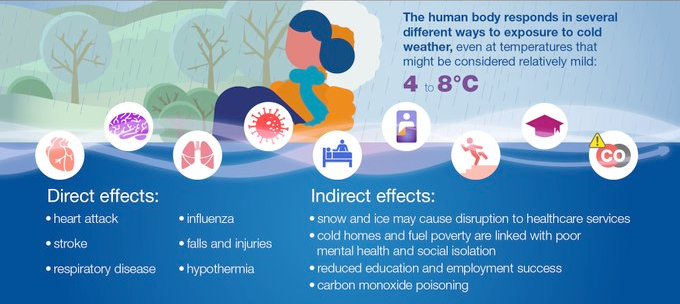
Increased Risk of Respiratory Infections Cold air can dry out the nasal passages and reduce the body’s natural defense mechanisms. Winter also sees a rise in indoor gatherings, leading to the rapid spread of viruses like the flu, COVID-19, and the common cold.
Exacerbation of Chronic Conditions
Individuals with asthma, bronchitis, arthritis, or cardiovascular diseases may notice a worsening of symptoms during cold weather. Cold temperatures can constrict blood vessels, leading to increased blood pressure and a higher risk of heart attacks.
Seasonal Affective Disorder (SAD)
The lack of sunlight during shorter winter days can lead to seasonal depression or "winter blues". People may feel lethargic, experience mood swings, and have trouble sleeping.
Weakened Immune System
Colder weather may impair the immune response, making the body more susceptible to infections. Poor diet and lack of sunlight (and thus vitamin D) can also contribute to this.
Dry Skin and Other Skin Issues
Low humidity and indoor heating systems can dehydrate the skin, leading to dryness, irritation, and eczema flare-ups.
Precautionary Measures to Stay Healthy During Winter
Boost Your Immunity
Eat a nutrient-rich diet with plenty of fruits, vegetables, whole grains, and lean proteins.
Vitamin D supplements or safe sun exposure can help counteract the lack of sunlight.
Stay hydrated even if you don’t feel thirsty.
Dress Appropriately
Layering clothing helps trap body heat. Wear hats, scarves, and gloves to protect against frostbite and hypothermia, especially in extremely cold climates.
Practice Good Hygiene
Wash hands regularly.
Disinfect frequently touched surfaces.
Avoid close contact with sick individuals.
Get a flu shot and stay updated on COVID-19 vaccinations or boosters.
Stay Physically Active
It’s easy to become sedentary in winter, but regular exercise boosts immunity, supports cardiovascular health, and improves mental well-being.
Use a Humidifier
Combat dry indoor air with a humidifier to protect your skin and respiratory system. Also, apply moisturizers to prevent skin dryness.
Monitor Mental Health
Spend time outdoors during daylight hours.
Engage in hobbies and stay socially connected.
Consider light therapy if you’re experiencing symptoms of SAD.
Be Careful with Heating Devices
Ensure proper ventilation when using heaters or fireplaces to avoid carbon monoxide poisoning. Always use devices as directed and check smoke and CO detectors regularly.