


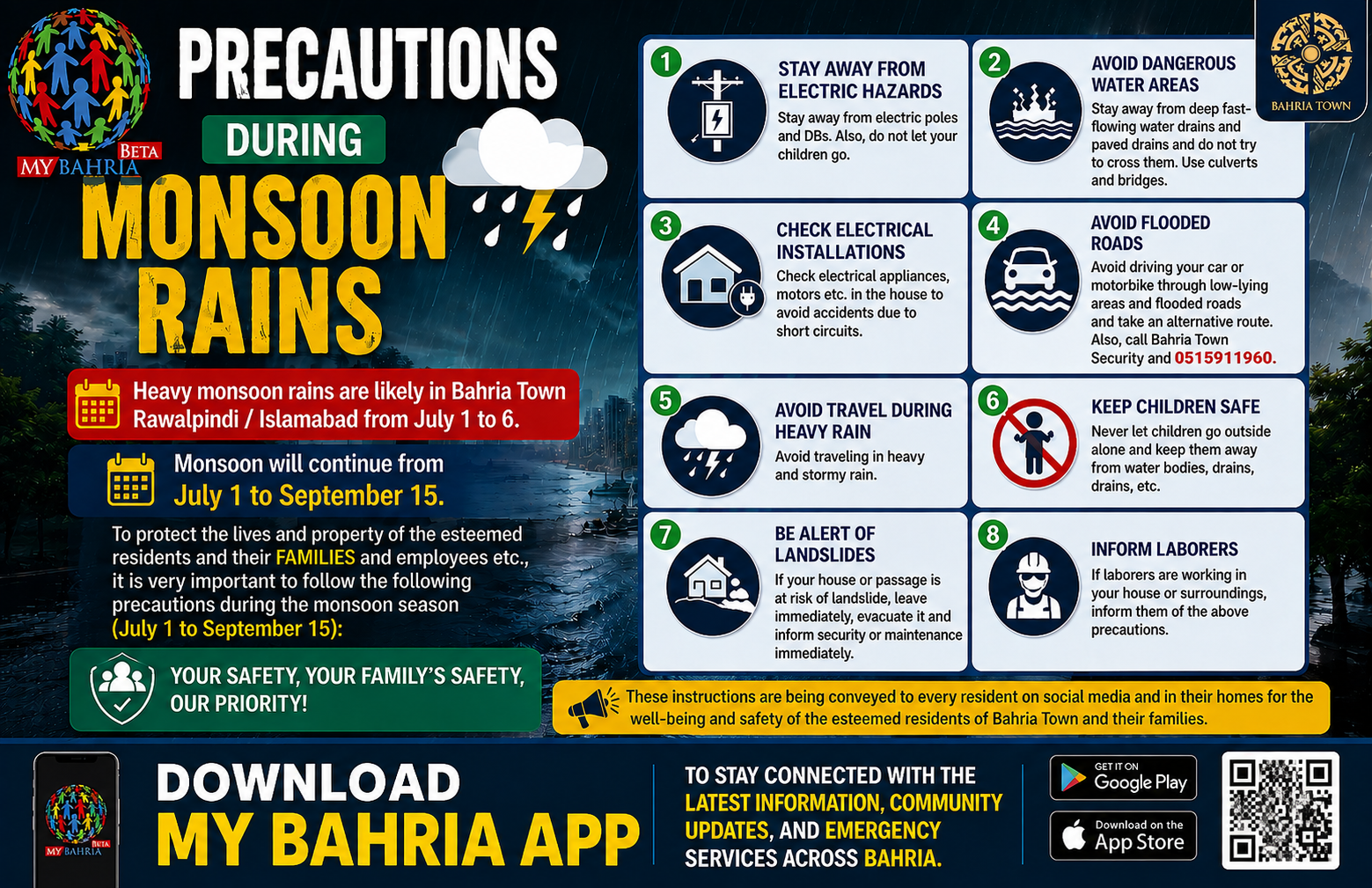






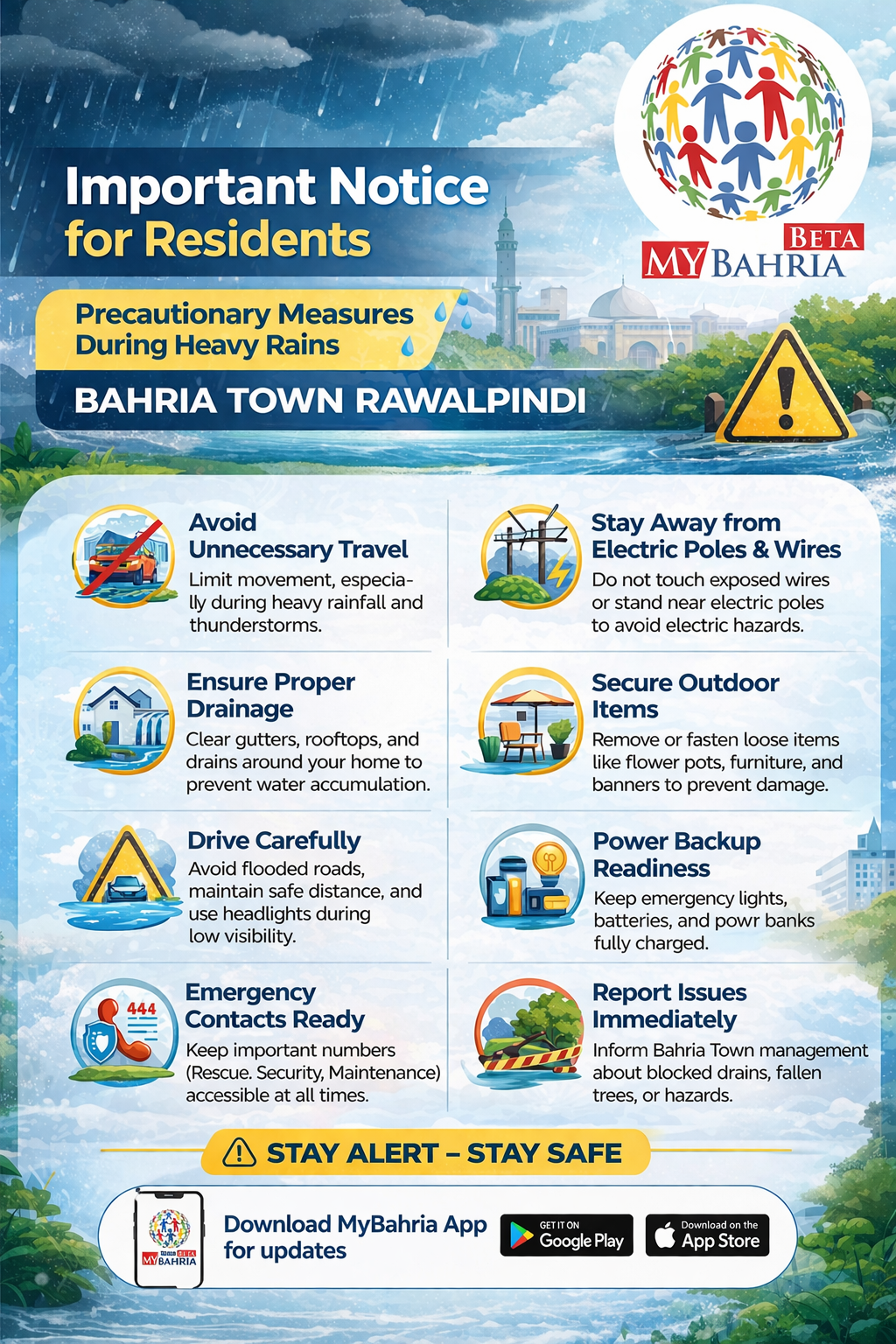












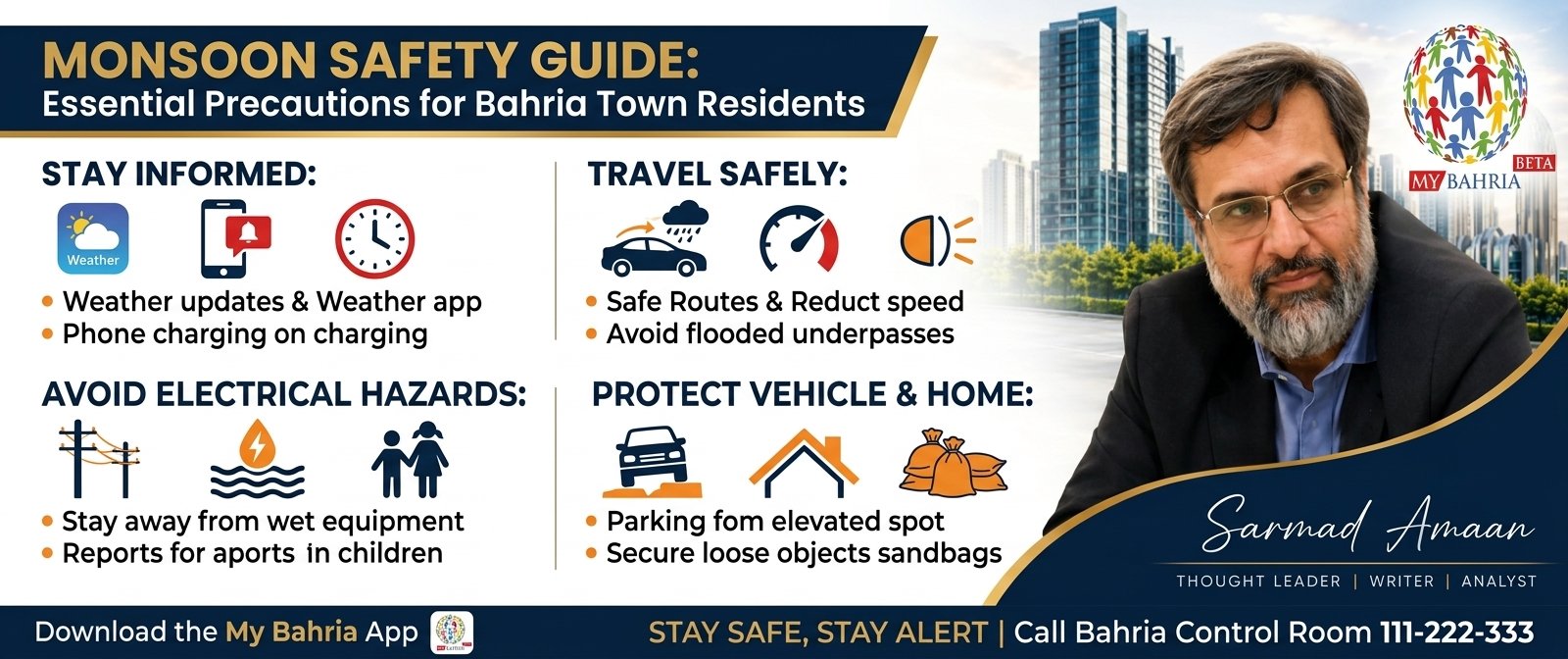
The monsoon season brings much-needed rainfall, but heavy downpours can also create serious risks, including waterlogging, slippery roads, flooding, electrical hazards, traffic accidents, sewer blockages, and vehicle breakdowns. By taking simple precautions and staying alert, residents can help protect themselves, their families, vehicles, and property.
Stay Informed During Monsoon
-
Keep yourself updated with the latest weather forecasts and warnings issued by the Pakistan Meteorological Department (PMD) and other relevant authorities.
-
Take weather alerts seriously, particularly warnings about heavy rainfall, thunderstorms, urban flooding, and strong winds.
-
Avoid unnecessary travel during periods of intense rainfall. If possible, wait until the rain subsides and conditions improve.
-
Keep your mobile phone charged so you can receive emergency alerts and contact emergency services when required.
-
Save important emergency contacts on your phone before severe weather begins.
Travel Safely During Heavy Rain
Heavy rain can significantly reduce visibility and make roads slippery. Water may also conceal potholes, open drains, damaged road surfaces, and other hazards.
-
Avoid unnecessary travel during heavy rainfall.
-
If you must travel, choose safer and familiar routes and avoid roads known to accumulate rainwater.
-
Never drive through deep or rapidly flowing water.
-
Do not underestimate standing water; it may be deeper than it appears and could conceal open manholes or damaged roads.
-
Reduce your speed and maintain a greater-than-usual distance from the vehicle ahead.
-
Avoid sudden braking, sharp turns, rapid acceleration, and unnecessary lane changes.
-
Use headlights and windshield wipers to improve visibility.
-
Be particularly careful around pedestrians, cyclists, motorcyclists, and children.
-
Avoid using your mobile phone while driving.
-
Do not drive through flooded underpasses, low-lying roads, or areas where the water level is rising.
-
If road conditions become unsafe, stop at a safe location and wait for the rain to subside.
Protect Yourself from Electrical Hazards
Water and electricity can be extremely dangerous.
-
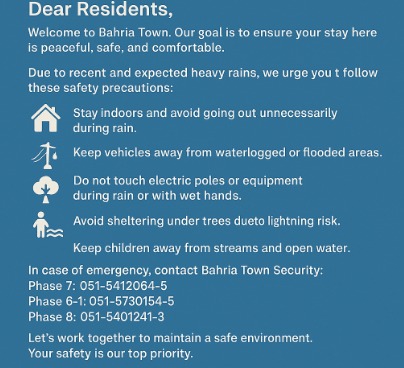
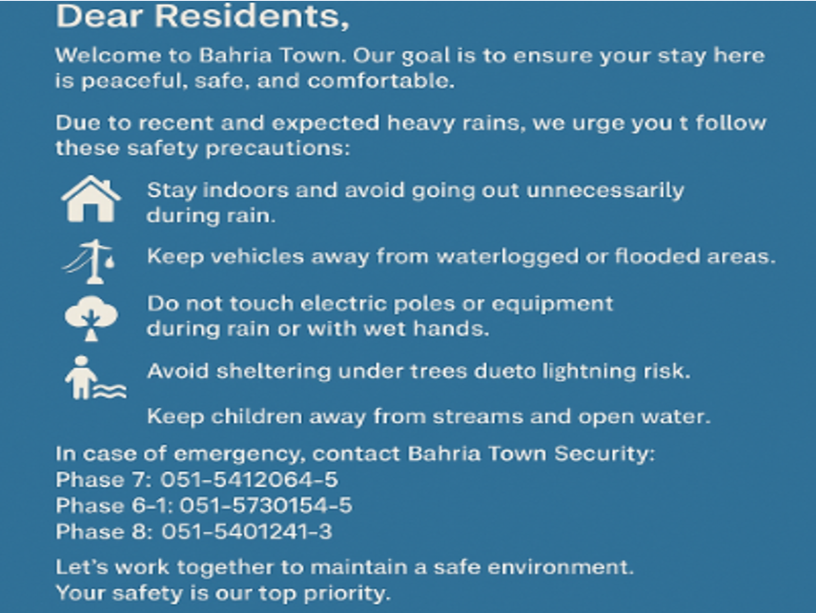
Stay away from electric poles, transformers, electrical cabinets, and exposed or fallen wires.
-
Never touch an electrical appliance, switch, or socket with wet hands.
-
Do not walk through water near electrical installations.
-
If you see a fallen electrical wire, keep a safe distance and immediately report it to the relevant authorities.
-
Keep children away from flooded areas, electrical equipment, and utility installations.
-
If water enters your home, switch off the main electricity supply only if it is safe to do so. Do not enter standing water to reach an electrical switch.
Protect Your Vehicle
Rainwater can cause significant damage to vehicles, particularly when they are parked in low-lying areas.
-
Always park your vehicle in a safe and elevated location where possible.
-
Avoid parking near drainage channels, low-lying roads, underpasses, trees, electric poles, or structures that may become unstable.
-
Check your vehicle's tyres, brakes, headlights, indicators, windshield wipers, and battery before travelling.
-
Keep an emergency kit, flashlight, first-aid supplies, drinking water, and basic tools in your vehicle.
-
Keep your vehicle's windows and doors properly closed during heavy rain.
-
Do not attempt to drive through water if you cannot confidently judge its depth and condition.
If Your Vehicle Gets Stuck in Floodwater
If your vehicle becomes stranded in rainwater, stay calm and prioritize human life over the vehicle and valuables.
-
Do not panic.
-
Do not repeatedly attempt to restart the engine if it stalls. Water can cause serious engine damage.
-
Do not try to push the vehicle through strong or flowing water.
-
If the water is rising rapidly or the current is strong, leave the vehicle as soon as it is safe to do so.
-
Try to exit through the doors. If the doors cannot be opened because of water pressure, use the windows.
-
If the windows are not opening, use a suitable hard object or emergency window-breaking tool to escape.
-
If the water level continues to rise and you cannot safely exit, move to the roof of the vehicle and call for help.
-
Do not risk your life attempting to retrieve valuables.
-
Once outside, move toward higher ground and stay away from fast-moving water and electrical hazards.
-
Contact the relevant emergency service or Bahria Town Security Control Room for assistance.
Protect Your Home and Property
Residents should take preventive measures before heavy rainfall begins.
-
Keep drains, gutters, and water outlets around your property clear of leaves, rubbish, and other debris.
-
Do not throw garbage into storm drains or sewer lines.
-
Check your roof, balconies, windows, doors, and boundary walls for potential leakage or damage.
-
Secure loose outdoor furniture, plant pots, signs, umbrellas, and other objects that could be blown away by strong winds.
-
Keep important documents, medicines, electronics, and valuables in elevated and waterproof locations.
-
If your property is located in a low-lying area, prepare for the possibility of water entering the premises.
-
Keep sandbags or other suitable flood-protection materials available where necessary.
-
Ensure children do not play in flooded streets, drainage channels, or areas with standing water.
Sewer Blockages and Water Accumulation
Blocked drainage systems can quickly worsen flooding during intense rainfall.
-
Immediately report blocked sewer lines, overflowing drains, or unusual water accumulation to the Bahria Town Administration.
-
Do not attempt to remove a blockage yourself if the area is flooded or unsafe.
-
Keep manhole covers and drainage channels clear of rubbish.
-
Never walk or drive over an area where a manhole cover may have been displaced by floodwater.
-
Warn children to stay away from drainage channels and flooded streets.
If You Are Walking During Heavy Rain
Pedestrians are also vulnerable during monsoon conditions.
-
Avoid walking through fast-moving or deep water.
-
Stay away from electrical poles, transformers, fallen wires, and damaged structures.
-
Use designated pedestrian routes whenever possible.
-
Wear suitable footwear with good grip to reduce the risk of slipping.
-
Avoid using headphones or mobile phones while crossing roads during heavy rain.
-
Be especially cautious around vehicles because drivers may have reduced visibility.
-
Never allow children to play in rainwater, drainage channels, or flooded streets.
Thunderstorm and Strong-Wind Precautions
During thunderstorms or strong winds:
-
Stay indoors whenever possible.
-
Keep away from windows, balconies, rooftops, and exposed areas.
-
Do not stand under trees during thunderstorms.
-
Avoid unnecessary outdoor activity until the weather improves.
-
Secure loose objects around your home that could become airborne.
-
If you are outdoors and unable to reach a building, move away from isolated trees, poles, fences, and other elevated or conductive objects.
-
Unplug sensitive electrical and electronic equipment if there is a risk of electrical surges, provided it is safe to do so.
Keep an Emergency Kit Ready
Every household should consider keeping a basic monsoon emergency kit containing:
-
Flashlight and spare batteries
-
Fully charged power bank
-
First-aid supplies
-
Essential medicines
-
Drinking water
-
Basic non-perishable food
-
Waterproof document storage
-
Emergency contact numbers
-
Whistle
-
Basic tools
-
Raincoats or umbrellas
-
Necessary supplies for infants, elderly family members, or pets
Help Children and Vulnerable Family Members
Children, elderly residents, and people who require additional assistance may be more vulnerable during severe weather.
-
Keep children indoors during heavy rain and thunderstorms.
-
Explain the dangers of flooded roads, open drains, electrical wires, and moving water.
-
Check on elderly family members and neighbours when severe weather occurs.
-
Make sure family members know where emergency supplies and important contact numbers are kept.
-
Keep pets indoors and away from contaminated or stagnant water.
Report Emergencies Promptly
Early reporting can help authorities respond more quickly.
Immediately report:
-
Accidents and road emergencies
-
Flooding or rapidly rising water
-
Blocked sewer lines or drains
-
Fallen electrical wires
-
Damaged roads or infrastructure
-
Unsafe structures or fallen trees
-
Any other serious hazard requiring immediate attention
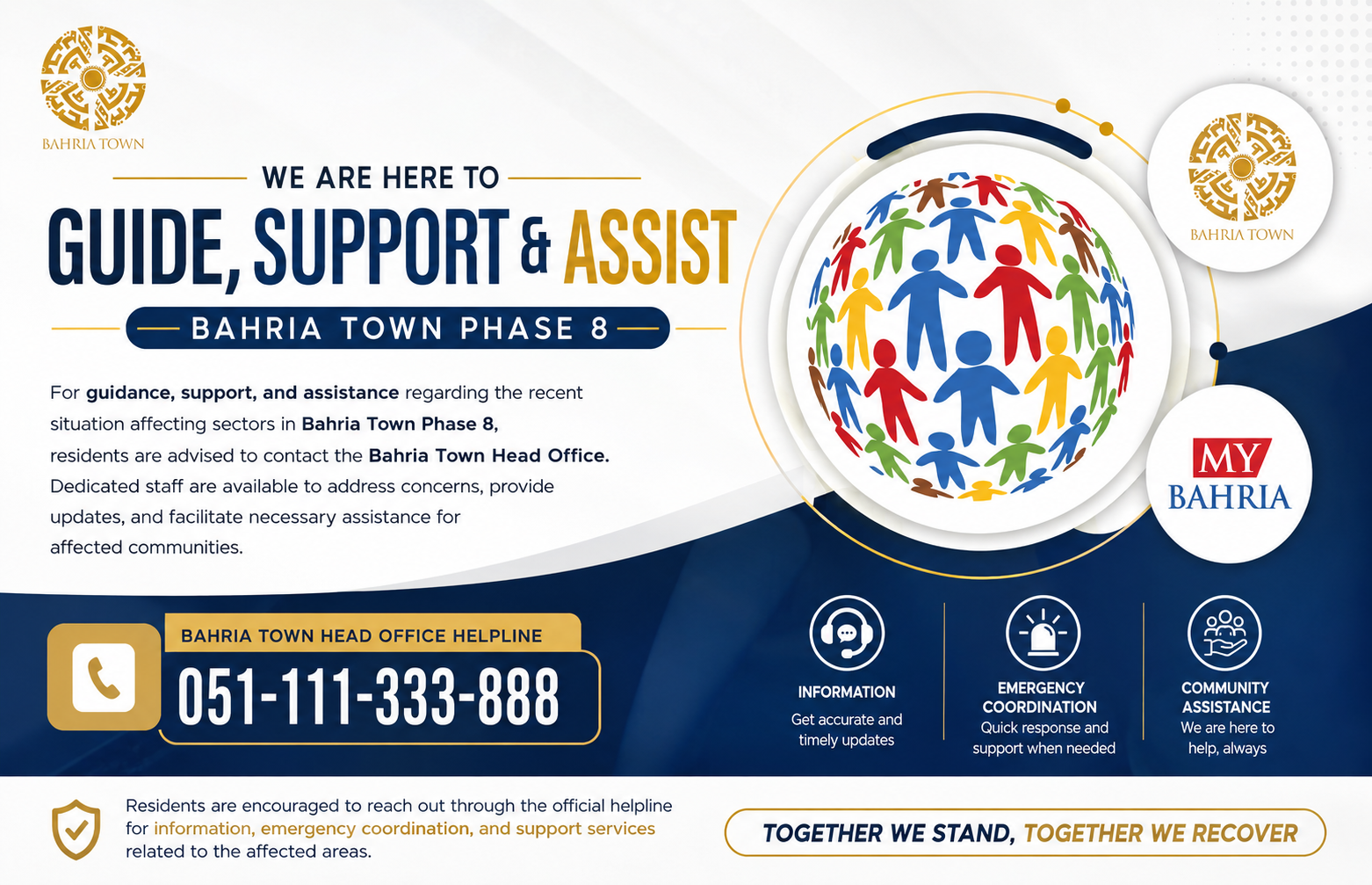
In case of an accident or emergency, immediately contact the Bahria Town Security Control Room. For drainage blockages or water accumulation, promptly inform the Bahria Town Administration.
Follow Official Safety Instructions
Residents are requested to cooperate with Bahria Town management and emergency authorities during severe weather conditions. Follow applicable Bahria Town Byelaws, safety instructions, traffic directions, emergency announcements, and temporary restrictions issued during the monsoon season.
Remember: No vehicle, property, or possession is more valuable than a human life.
Stay Safe, Stay Alert
Monsoon safety begins with preparation. Staying informed, avoiding unnecessary travel, driving cautiously, keeping away from electrical hazards, protecting your property, and reporting emergencies promptly can significantly reduce the risks associated with heavy rainfall.
Download the My Bahria App on your mobile to stay connected with community information, updates, and emergency services across Bahria Town.

